Every option has the same button: press and talk. What changes is the path the voice takes, and that decides range, cost, licensing and what happens when there is no signal.
| PoC radio | DMR radio | Analog radio | Phone app | |
|---|---|---|---|---|
| Voice path | Carrier 4G/5G network | Radio waves, direct or through your own repeaters | Radio waves, direct or through your own repeaters | 4G/5G or Wi-Fi |
| Range | Wherever there is data signal | A few kilometers radio to radio; more with repeaters | Similar to DMR | Wherever there is data signal |
| Works without a cellular network | No, except MCPTT direct mode | Yes | Yes | No |
| Frequency license | Not needed, the carrier holds it | Needed in most countries | Needed, except license-free radios | Not needed |
| Recurring cost | Platform and SIM | License fees and repeater upkeep | License fees and upkeep | Platform and data plan |
PoC radio
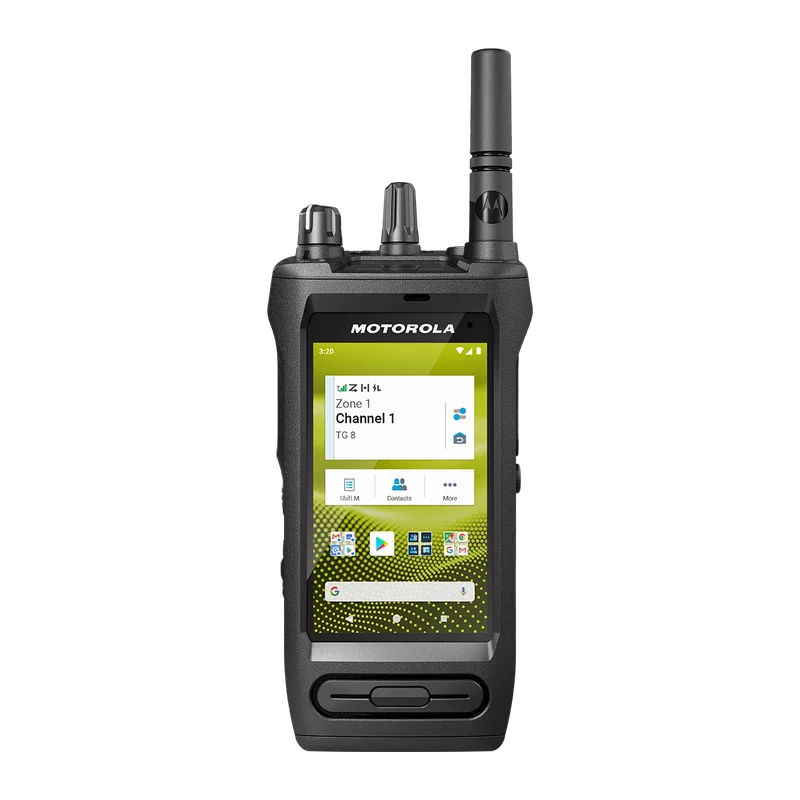
It uses a carrier’s SIM and data network, so its range is the coverage map. A team spread across several cities talks as if it were in the same yard. No frequency license or repeater is needed, but there is a monthly platform and SIM cost, and it stops working where there is no signal. See what a PoC radio is and what it costs.
A good fit for: logistics, fleets, security guards across several sites, field teams in cities with good coverage.
DMR radio
A DMR digital radio talks directly to other radios with no third-party network, or through repeaters the company installs itself. It works where there is no cellular signal, as long as another radio or a repeater is in range. Using your own frequency usually takes a license. In Brazil, for example, it requires Anatel authorization under the Private Limited Service (SLP), with Fistel fees per station: one at installation and a yearly one.
A good fit for: a concentrated area (factory, port, mine, farm, event) and places without cellular coverage, or when communication cannot depend on a carrier.
Analog radio
Works like DMR with older technology: fewer channels per frequency, no standard encryption and audio that degrades with distance. License-free radios, sold in pairs in stores, need no license but have limited power and range. Many companies still run analog fleets and are migrating gradually.
Push-to-talk app
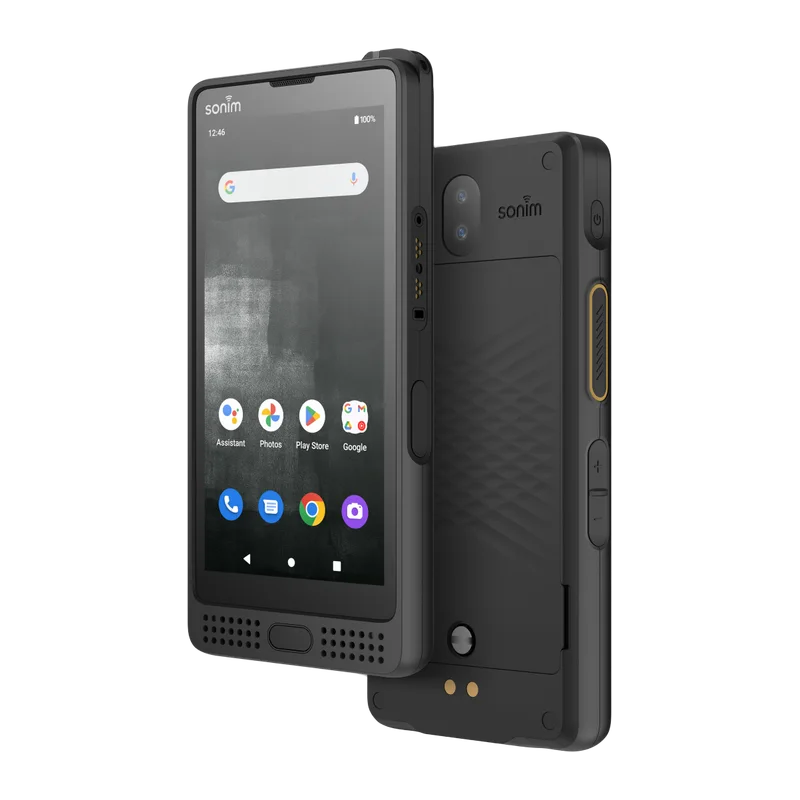
Apps such as Zello or WAVE PTX turn an ordinary phone into a PoC radio. They have the lowest entry cost (Zello Work is US$8 per user per month), but a consumer phone has no physical button, breaks more easily and its battery lasts less over a long shift. A middle ground is a rugged phone with a PTT button, such as the Sonim XP10: it runs the same apps with a dedicated button and water and drop protection. See the directory’s rugged phones.
Hybrid radios: PoC and DMR in one device
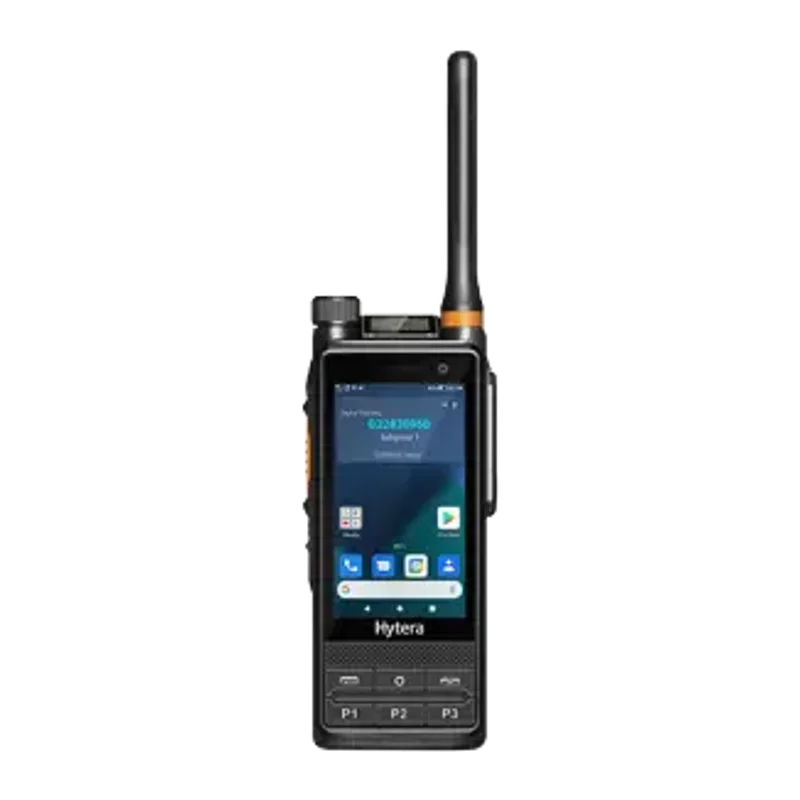
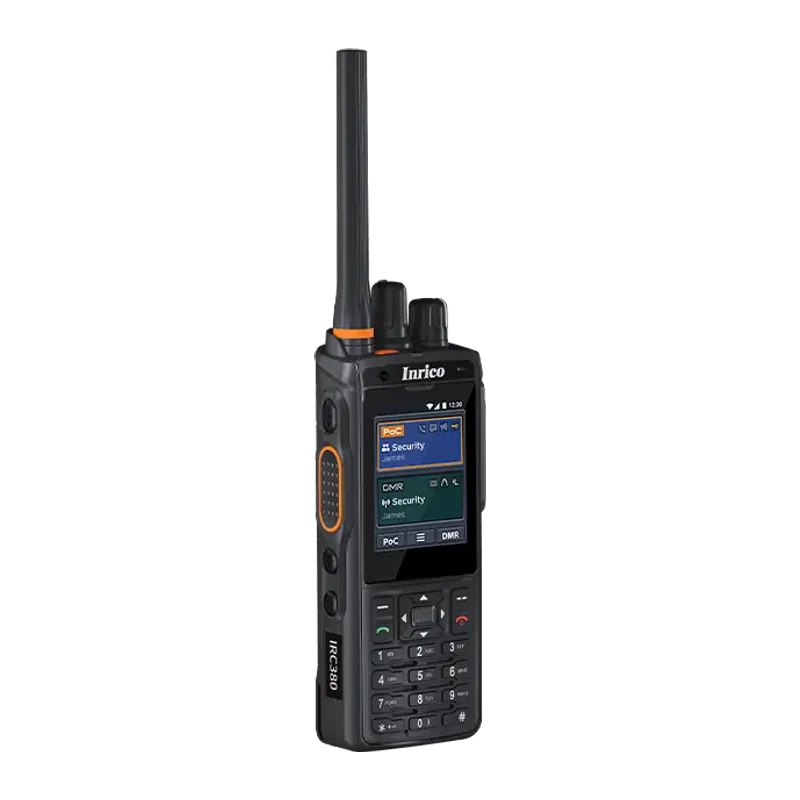
When a team needs nationwide reach and communication where there is no signal, some devices carry both technologies. The Hytera PDC680 combines DMR and LTE and switches between networks. The Inrico IRC380 has 4G PoC, DMR and analog FM. A team can keep its existing DMR radios and add PoC for whoever is far away.
And MCPTT?
MCPTT is the 3GPP standard for mission-critical push-to-talk over LTE and 5G, with targets such as an access time under 300 ms and a direct mode between devices. It is the path public-safety networks are taking. See the devices with MCPTT.
In short
- A spread-out team in areas with coverage: PoC radio or a rugged phone with an app.
- A concentrated area or no coverage: DMR.
- Both at once: a hybrid radio, or DMR plus PoC with a gateway between the networks.
- Still unsure? Answer five questions in Help me choose.





 *